Source Mobile Diesel Generator for Construction, Mining, and Events
Explore 30 mobile diesel generator options ranging from 30kW to 800kW for land use applications. Buyers can compare specifications including power output, fuel consumption, and dimensions to find suitable units for construction, mining, and emergency crew needs; compare the available evidence and request quotations based on your requirements.
Key considerations
Products List


$28000.00 - $32000.00
Moq: 1


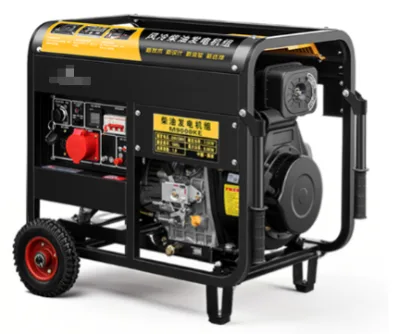

Mobile Power Diesel Generator for Telecom Base Station Emergency Backup
$110000.00 - $116000.00
Moq: 1


Comprehensive Sourcing Guide
Mobile Diesel Generator Sourcing Guide
Procuring mobile diesel generators requires a strategic approach that balances immediate operational needs with long-term reliability and total cost of ownership. Buyers must navigate a complex landscape of technical specifications, compliance requirements, and supplier capabilities to ensure the selected unit meets their specific power demands. This guide provides evidence-based insights to help procurement professionals make informed decisions, focusing on key attributes such as output capacity, fuel efficiency, and regulatory adherence. By understanding the critical factors that influence performance and durability, buyers can mitigate risks associated with equipment failure and ensure seamless integration into their existing infrastructure.
The sourcing process begins with a clear definition of power requirements, including rated voltage, frequency, and power factor, which are essential for matching the generator to the load profile. Buyers should also consider the excitation mode, cooling method, and installation type to ensure compatibility with the intended environment. Whether for common units, standby applications, or emergency crews, the selection criteria must align with the operational context. This guide outlines the essential steps for evaluating suppliers, verifying technical specifications, and establishing robust quality control measures, ensuring that the final procurement decision is grounded in factual data and industry best practices.
Product Scope and Observed Listing Signals
The current market for mobile diesel generators presents a diverse range of options, with observed product counts indicating a substantial inventory of available units. Buyers will encounter a wide price spectrum, ranging from entry-level models to high-capacity industrial solutions, reflecting variations in power output, build quality, and feature sets. The minimum order quantities (MOQ) typically start at one unit, offering flexibility for both single-unit purchases and larger fleet acquisitions. This variability allows buyers to tailor their procurement strategy to specific budget constraints and operational scales, ensuring that they can acquire the right equipment without unnecessary financial burden or inventory excess.
Observed listing signals reveal that many suppliers offer customization options, allowing buyers to modify units to meet specific operational requirements. Common attributes include four-stroke engines, AC rotating exciters, and water cooling systems, which are standard for maintaining optimal performance under various conditions. The units are generally designed for land use, with fixed installation methods being prevalent. Buyers should pay close attention to the listed power ratings, which can range from smaller capacities like 30kw to larger units exceeding 800kw, ensuring that the selected generator aligns with the intended application, whether it be for ordinary land use or more demanding industrial environments.
Technical Specifications to Verify
When evaluating technical specifications, buyers must prioritize parameters that directly impact performance and reliability. Key attributes to verify include the rated power, voltage, current, and frequency, which define the generator’s electrical output capabilities. For instance, units may offer rated powers of 120 Kw or 300kw, with corresponding voltages of 400V and currents of 216A or 540A. It is crucial to confirm the rated power factor, typically Cosφ = 0.8 (Lagging), and the steady-state voltage regulation rate, which should be ≤±0.5% to ensure stable power delivery. These specifications are fundamental for matching the generator to the load requirements and preventing potential electrical issues.
Additional technical details such as fuel consumption, weight, and insulation class are equally important for assessing efficiency and durability. Fuel consumption rates, observed at 158g/Kw·H or ≤195g/Kw·H, provide insight into operational costs over the generator’s lifespan. The weight of the unit, ranging from 600 Kg to 3100kg, affects mobility and installation logistics. Buyers should also verify the starting method, such as DC24V motor start, and the regulation method, typically AVR (Automatic Voltage Regulator), to ensure ease of operation and consistent voltage output. These factors collectively determine the generator’s suitability for the intended application and its long-term performance reliability.
Compliance and Safety Documentation
Compliance with international and regional standards is a critical aspect of sourcing mobile diesel generators. Buyers should verify that the units carry relevant certifications, such as CE and ISO9001, which indicate adherence to quality management and safety standards. These certifications are essential for ensuring that the generator meets the regulatory requirements of the destination market, facilitating smoother customs clearance and reducing the risk of non-compliance penalties. Additionally, buyers should check for exhaust emission standards, such as China National Stage III, to ensure environmental compliance, particularly in regions with strict emission regulations.
Safety documentation should also include detailed information on the generator’s protection class, typically IP22, which indicates the level of protection against solid objects and water ingress. Buyers must ensure that the unit’s wiring method, such as Three-Phase Four Fire Y-Connection, is compatible with their existing electrical infrastructure. Furthermore, the insulation class, often H Class, should be verified to ensure that the generator can withstand high temperatures and operate safely under load. These compliance and safety measures are vital for protecting personnel, equipment, and the environment, ensuring that the generator operates reliably and legally in its intended application.
Cost Drivers and Commercial Terms
Several factors influence the total cost of ownership for mobile diesel generators, including the initial purchase price, fuel efficiency, and maintenance requirements. Buyers should consider the observed price range, which spans from $10 to $116,000, reflecting the diversity in power capacity and feature sets. While lower-priced units may seem attractive, buyers must evaluate the long-term operational costs, including fuel consumption and potential maintenance expenses. Units with lower fuel consumption rates, such as 158g/Kw·H, can offer significant savings over time, making them a more cost-effective choice despite a higher initial investment.
Commercial terms, such as MOQ and lead times, also play a crucial role in the procurement decision. Buyers should negotiate favorable terms that align with their operational timeline and budget constraints. The availability of customization options can add value but may also impact the cost and lead time. Additionally, packaging methods, such as Wooden Packaging or PE Film Packaging, should be considered to ensure safe transportation and prevent damage during transit. By carefully evaluating these cost drivers and commercial terms, buyers can make informed decisions that balance immediate financial considerations with long-term operational efficiency and reliability.
Supplier Qualification and Quality Control
Selecting a qualified supplier is essential for ensuring the quality and reliability of mobile diesel generators. Buyers should verify the supplier’s production capabilities, including their manufacturing standards and quality control processes. Suppliers with certifications such as ISO9001 demonstrate a commitment to quality management, which is crucial for producing consistent and reliable products. Buyers should also inquire about the supplier’s experience in the industry, their track record of delivering units on time, and their ability to provide after-sales support and technical assistance. These factors are indicative of the supplier’s overall reliability and their ability to meet the buyer’s specific requirements.
Quality control measures should be established to ensure that the delivered units meet the specified technical and compliance standards. Buyers should request detailed inspection reports, test results, and certification documents from the supplier to verify the unit’s performance and safety. Additionally, buyers should consider implementing their own quality control checks upon receipt of the units, including visual inspections and functional tests. By establishing robust supplier qualification and quality control processes, buyers can mitigate the risk of receiving defective or non-compliant units, ensuring that their procurement investment yields the expected operational benefits and reliability.
Long-Term Procurement Checks
Long-term procurement success depends on establishing ongoing relationships with suppliers and implementing continuous improvement strategies. Buyers should regularly review supplier performance, including delivery times, product quality, and after-sales support, to identify areas for improvement. Establishing clear communication channels and feedback mechanisms can help address any issues promptly and foster a collaborative partnership. Additionally, buyers should stay informed about industry trends and technological advancements, such as new emission standards or fuel efficiency improvements, to ensure that their procurement strategy remains aligned with evolving market conditions and regulatory requirements.
Regular maintenance and performance monitoring of the deployed generators are also critical for long-term reliability. Buyers should develop comprehensive maintenance schedules and training programs for their operational staff to ensure proper care and operation of the units. By tracking key performance indicators, such as fuel consumption, voltage regulation, and maintenance frequency, buyers can identify potential issues early and implement corrective actions. This proactive approach not only extends the lifespan of the generators but also optimizes their operational efficiency, ensuring that the procurement investment continues to deliver value over the long term.
FAQs
How does a self-starting mobile diesel generator maintain stable voltage output?
A self-starting diesel generator maintains stable voltage through an AVR, or automatic voltage regulator, which continuously adjusts excitation to the alternator. Typical steady-state voltage regulation is within plus or minus 0.5 percent, with transient dips limited to negative 15 percent and stabilization within about 1.5 seconds, keeping sensitive loads powered reliably during changing demand.
What output ratings can mobile diesel generator units typically provide?
Units commonly provide AC three-phase output at 400V, with rated frequencies of 50Hz and a power factor of 0.8 lagging. Available capacities in this range span roughly 30kW or 37.5kVA up to larger sets around 300kW or 375kVA and beyond, so buyers should match rated current, for example 54A to 540A, to their load requirements.
Can mobile diesel generator units be customized for specific site requirements?
Yes, customization is generally available for land-use diesel generator sets. Buyers can typically specify enclosure or packaging preferences such as wooden or PE film packaging, and confirm configuration details like starting method, cooling method, and wiring connection. Always confirm the exact customization scope, lead time, and any added cost with the supplier before placing an order.
Which starting methods are used for mobile diesel generator sets?
Most diesel generator sets use a DC24V electric motor start, which allows self-starting operation for standby or emergency service. This electric start arrangement removes the need for manual cranking and supports automatic transfer in backup applications. Verify battery capacity and starting circuit specifications with the supplier, since requirements can vary between smaller and larger capacity models.
What certifications should buyers verify when sourcing a mobile diesel generator?
Buyers should request documentation for CE marking and ISO9001 quality management compliance, which are commonly cited certifications for these units. Certification evidence should match the exact model and production batch being ordered. Also check whether the engine meets applicable exhaust emission standards, such as China National Stage III for certain models, depending on the destination market's rules.
How do cooling and installation methods affect mobile diesel generator deployment?
Most land-use diesel generator sets in this range use water cooling and fixed installation, which provides reliable heat management for continuous or standby operation. Fixed installation requires a level foundation, adequate ventilation, and clearance for maintenance access. Mobile or trailer-based applications need confirmation with the supplier, since the standard configuration and dimensions, such as 2600 by 1100 by 2140 millimeters, affect transport and placement.
What fuel consumption should buyers expect from a mobile diesel generator?
Fuel consumption depends on the model and load level. Listed figures range from about 158 grams per kilowatt-hour on smaller sets to a maximum of 195 grams per kilowatt-hour on larger units. Consumption rises under transient load spikes, so sizing the generator close to typical running load, rather than peak demand alone, improves efficiency and reduces operating cost.
Which inspection points matter most before accepting a mobile diesel generator shipment?
Focus on the nameplate ratings, confirming rated power, voltage, current, and frequency match your order. Check insulation class, commonly H class, protection class such as IP22 for the alternator, and physical condition of the packaging, whether wooden or PE film. Verify weight against specifications, for example around 600 kilograms for smaller sets, and request factory test records for voltage and frequency regulation performance.